

Introduction
Cheque Bounce Complaint Maintainable litigation under Section 138 of the Negotiable Instruments Act, 1881 (NI Act) has always required strict compliance with statutory timelines. Recently, the Delhi High Court (Smt. Rama Oberoi v. State NCT of Delhi & Anr., decided on 03.09.2025) clarified important issues regarding the filing of complaints, the coexistence of civil and criminal remedies, and the limits of High Court powers in quashing petitions.
This judgment reaffirms well-settled principles and provides clarity for litigants, both complainants and accused.
Case Background
The petitioner sought the quashing of the summons issued in a cheque bounce case. She raised three main objections:
- The complaint was filed prematurely (before 45 days).
- The cheques did not bear her genuine signature.
- A civil suit was already filed for recovery; hence, the criminal complaint was not maintainable.
Court’s Findings
1. Civil and Criminal Remedies Can Co-exist
The Court held that a complainant can pursue both remedies:
- Civil suit → recovery of money.
- Criminal complaint → punishment for dishonour.
This principle has been reaffirmed in P. Mohanraj v. Shah Brothers Ispat Pvt. Ltd. (2021) 6 SCC 258, where the Supreme Court held that civil proceedings (like insolvency cases) do not bar prosecution under Section 138 NI Act.
2. Limitation Period Explained
- The drawer has 15 days after receipt of the statutory notice to make payment.
- If no payment is made, the cause of action arises.
- Complainant then has one month to file a complaint.
The High Court clarified that this is not a consolidated 45-day period. In this case:
- Notice served on 22.09.2022.
- Payment due by 07.10.2022.
- Complaint filed on 29.10.2022 → well within time.
This principle was first crystallized in K. Bhaskaran v. Sankaran Vaidhyan Balan (1999) 7 SCC 510, where the Supreme Court explained the step-by-step compliance under Section 138.
3. Dispute of Signatures
The accused argued that the cheques did not bear her signature. The Court held that:
- Cheques bore her printed name as drawer.
- Whether signatures are genuine is a matter of trial, not quashing.
The Supreme Court in Bir Singh v. Mukesh Kumar (2019) 4 SCC 197 held that once execution of a cheque is admitted, the presumption under Section 139 NI Act operates strongly in favour of the complainant. The burden is on the accused to rebut.
4. Effect of Notice
The Court relied on the settled position in C.C. Alavi Haji v. Palapetty Muhammed (2007) 6 SCC 555, where the Supreme Court held that if the drawer receives summons from the court and still fails to make payment within 15 days, he cannot escape liability merely by disputing service of notice.
5. Jurisdiction Clarification (Background Law)
Though not directly an issue here, it is worth noting the ruling in Dashrath Rupsingh Rathod v. State of Maharashtra (2014) 9 SCC 129, where the SC initially restricted jurisdiction to the place where the drawee bank was located. Later, the 2015 amendment to the NI Act restored jurisdiction to where the cheque is presented.
Delhi High Court’s Decision
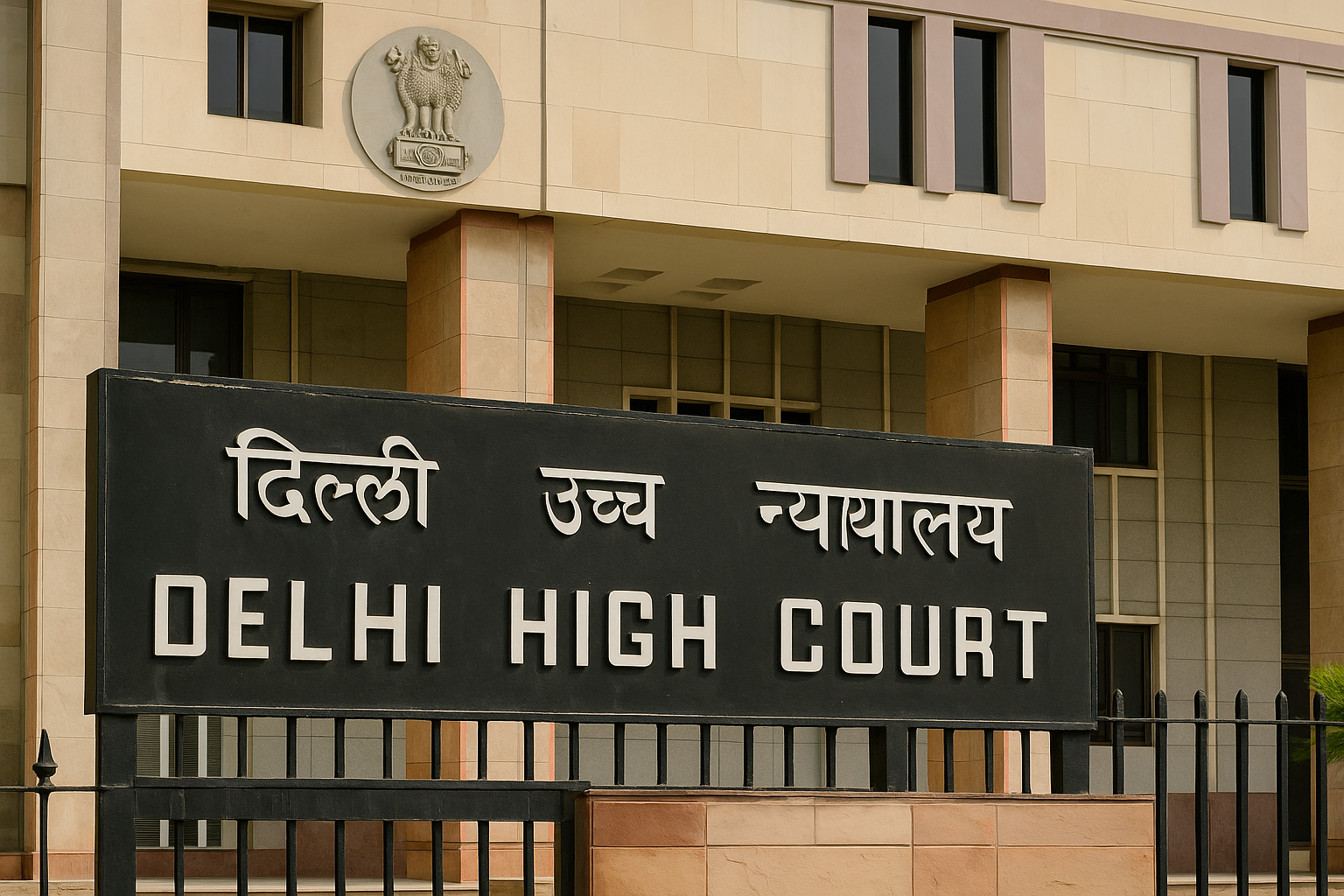
- Civil suit and criminal complaint can proceed together.
- The complaint was within the limitation, not premature.
- Signature dispute is for trial, not for quashing under Section 528 BNSS (earlier S.482 CrPC).
- Petition dismissed as frivolous with costs of ₹10,000.
Key Takeaways
- 15 + 30 Rule: Complaint is valid if filed within one month after expiry of 15-day payment window.
- Civil & Criminal Together: Recovery suit and cheque bounce case can proceed simultaneously.
- Signature Disputes: These require trial and cannot be decided at the quashing stage.
- Frivolous Petitions Discouraged: Courts may impose costs for wasting judicial time.
Conclusion
The Delhi High Court’s ruling strengthens the complainant’s position in cheque bounce matters. It clarifies timelines, upholds dual remedies, and prevents accused persons from misusing technical objections. This judgment, when read with landmark SC precedents, makes the law under Section 138 NI Act more robust and certain.
Also Read-

Adv. Sanjay Sharma is a Practicing Advocate in India, handling matters relating to Civil Law, Criminal Law, Goods and Services Tax (GST), and Insolvency & Bankruptcy laws.
Through Samvidhan Se Samadhaan, he works towards enhancing public legal awareness by presenting legal principles, procedures, and judicial decisions in clear, structured, and easily understandable language, supported by authoritative Supreme Court judgments.


One Comment
Comments are closed.